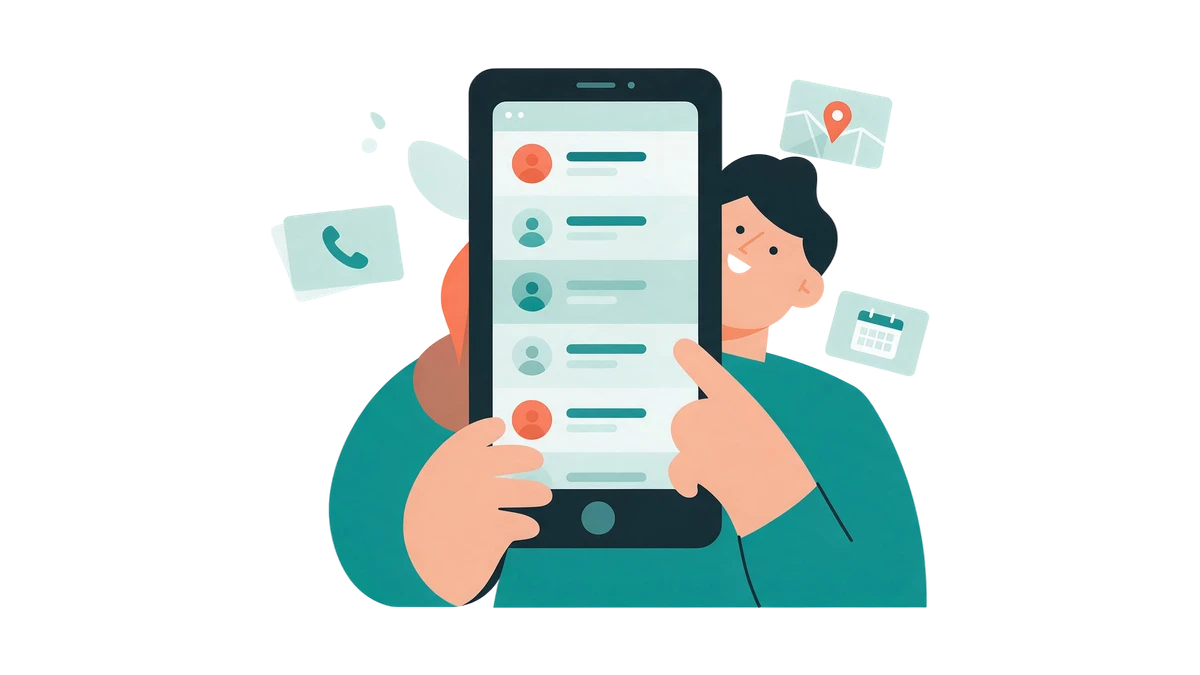
Why keep your doctors in one list
So you do not have to dig a number out of a chat or try to recall a specialist's name at the very moment you need it.
Contacts are usually scattered: the GP in the phone book, the dentist in messages, the lab on a test form, the specialist booking on the clinic's website. While everything is calm this is no trouble. It becomes trouble on the day you need to move an appointment, pass on a discharge note or tell a new doctor who is already treating you.
According to the US National Institute on Aging, important records are worth gathering in one place, and the names and phone numbers of your doctors belong on that list.1
Such a list does not replace a medical record. It answers simple questions: who, where, how to get in touch and what for.
What to note about each doctor
Five points are enough: who they are, where they practise, how to reach them, what you see them for and when the visits are.
Name and specialty
In full, as on the form or the report, and the specialty right away: GP, cardiologist, dentist. A year later a surname without a specialty says very little.
Clinic and address
The name, the address and, if it is hard to find, the floor or the room number. If the doctor practises in two places, note both.
How to reach them and book
The reception number, a direct number or email if the doctor gave one, the website or app for booking. Note the hours when it is easier to call.
What for
Briefly and in your own words: “yearly check-up”, “manages the treatment prescribed in March”. This is a note for you, not a diagnosis.
Last and next visit
The date of the last appointment and of the next one, if it is already booked. That shows at once whom to call to make an appointment.
Add more than doctors to the same list: the clinic's reception, the lab where you have your tests done and the pharmacy where you usually get your medicines. You have to contact them just as often.
Where to keep the list and how to keep it in order
Where it will be with you at the moment you need it – usually on your phone. And update it as soon as something changes.
The handiest place is one that is always with you: a note or an app on the phone. A paper copy at home helps whoever steps in if the phone is not available.
Correct an entry the same day the reception number changes, the doctor moves to another clinic or a new visit is booked. Every few months go through the whole list and remove the people you no longer see.
In its emergency guidance for people who are being treated or have been treated for cancer, the CDC advises keeping the doctor's name and phone number and a list of medicines in a kit prepared in advance. The advice fits any long-term treatment.2
If several doctors are involved, tell someone close you trust where the list is and which doctor manages the main treatment. This is only about finding a contact quickly: decisions about treatment are still the doctor's.
How it will work in MedKeep
The app will have a “Doctors” section – a list of contacts you can call or write to straight away.
- The doctor's card holds the name, specialty, phone, email, clinic and a note.
- You can call or send an email straight from the card.
- Doctors' contacts are kept on the phone and open without internet.
- A visit to the doctor can be added to a course of treatment – it appears in the schedule on its day and hour.
- In the profile you can add an emergency contact: the name, the phone and how they are related to you.
Nomi does not answer questions about treatment: it says this is a question for a doctor or a pharmacist and offers, for example, to save the doctor's contact.
MedKeep will not search for doctors or recommend them, and in the first release the doctor's card is not linked to courses and documents. The contacts are visible only to you. Searching for doctors nearby and booking appointments are planned for V2.